|
|
|
|
|
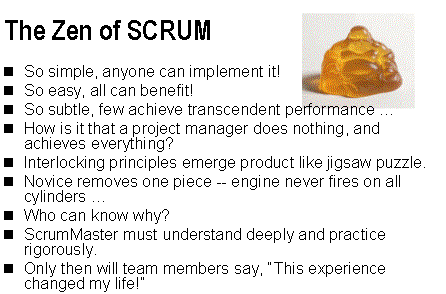
So simple, anyone can implement it! |
|
So easy, all can benefit! |
|
So subtle, few achieve transcendent performance
… |
|
How is it that a project manager does nothing,
and achieves everything? |
|
Interlocking principles emerge product like
jigsaw puzzle. |
|
Novice removes one piece -- engine never fires
on all cylinders … |
|
Who can know why? |
|
ScrumMaster must understand deeply and practice
rigorously. |
|
Only then will team members say, “This
experience changed my life!” |
|
|
|
|
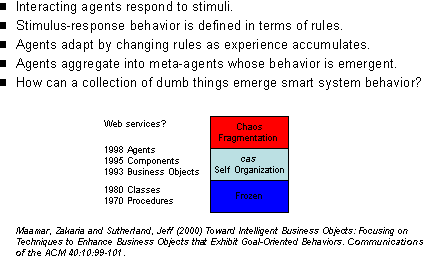
Interacting agents respond to stimuli. |
|
Stimulus-response behavior is defined in terms
of rules. |
|
Agents adapt by changing rules as experience
accumulates. |
|
Agents aggregate into meta-agents whose behavior
is emergent. |
|
How can a collection of dumb things emerge smart
system behavior? |
|
|
|
|
|
|
|
|
|
|
|
|
|
|
|
Maamar, Zakaria and Sutherland, Jeff (2000)
Toward Intelligent Business Objects: Focusing on Techniques to Enhance
Business Objects that Exhibit Goal-Oriented Behaviors. Communications of
the ACM 40:10:99-101. |
|
|
|
|
Business entities are examples of complex
adaptive systems. |
|
Modification time is on the order of months or
years, roughly time required to change software. |
|
Automating business processes renders parts of
the business in software. |
|
Business systems have severely constrained rule
sets, making ideal test bed for cas concepts. |
|
|
|
Sutherland, Jeff and van den Heuvel,
Willem-Jan (2002) Developing and integrating enterprise components and
services: Enterprise application integration and complex adaptive systems. Communications
of the ACM 45:10:59-64. |
|
|
|
|
Variation: there is a continuing abundance of
different elements (class libraries). |
|
Heredity or replication: the elements have the
capacity to create copies or replicas of themselves (inheritance). |
|
Differential "fitness": the number of
copies of an element that are created in a given time varies, depending on
interactions between the features of that element and the features of the
environment in which it persists (reuse). |
|
|
|
Daniel Dennett. Darwin's Dangerous Idea:
Evolution and the Meanings of Life. Simon and Schuster, 1995, p. 343. |
|
|
|
|
|
|
|
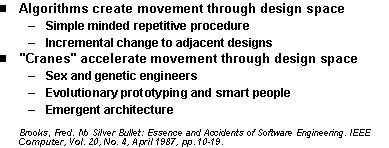
Algorithms create movement through design space |
|
Simple minded repetitive procedure |
|
Incremental change to adjacent designs |
|
"Cranes" accelerate movement through
design space |
|
Sex and genetic engineers |
|
Evolutionary prototyping and smart people |
|
Emergent architecture |
|
|
|
Brooks, Fred. No Silver Bullet: Essence and
Accidents of Software Engineering. IEEE Computer, Vol. 20, No. 4, April
1987, pp. 10-19. |
|
|
|
|
|
|
|
|
|
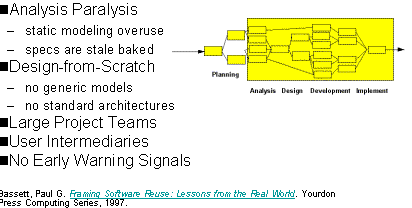
Analysis Paralysis |
|
static modeling overused |
|
specs are stale baked |
|
Design-from-Scratch |
|
no generic models |
|
no standard architectures |
|
Large Project Teams |
|
User Intermediaries |
|
No Early Warning Signals |
|
|
|
Bassett, Paul G. Framing Software Reuse: Lessons
from the Real World. Yourdon Press Computing Series, 1997. |
|
|
|
|
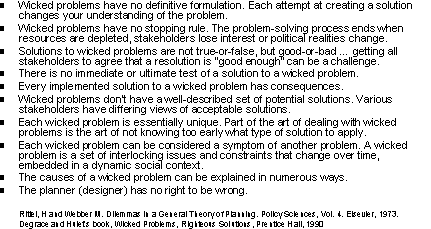
Wicked problems have no definitive formulation.
Each attempt at creating a solution changes your understanding of the
problem. |
|
Wicked problems have no stopping rule. The
problem-solving process ends when resources are depleted, stakeholders lose
interest or political realities change. |
|
Solutions to wicked problems are not
true-or-false, but good-or-bad … getting all stakeholders to agree that a
resolution is "good enough" can be a challenge. |
|
There is no immediate or ultimate test of a
solution to a wicked problem. |
|
Every implemented solution to a wicked problem
has consequences. |
|
Wicked problems don't have a well-described set
of potential solutions. Various stakeholders have differing views of
acceptable solutions. |
|
Each wicked problem is essentially unique. Part
of the art of dealing with wicked problems is the art of not knowing too
early what type of solution to apply. |
|
Each wicked problem can be considered a symptom
of another problem. A wicked problem is a set of interlocking issues and
constraints that change over time, embedded in a dynamic social context. |
|
The causes of a wicked problem can be explained
in numerous ways. |
|
The planner (designer) has no right to be wrong. |
|
|
|
Rittel, H and Webber M. Dilemmas in a
General Theory of Planning. Policy Sciences, Vol. 4. Elsevier, 1973. |
|
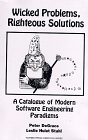
Degrace and Hulet's book, Wicked Problems,
Righteous Solutions, Prentice Hall, 1990 |
|
|
|
|
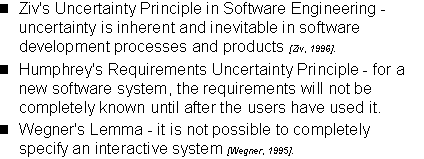
Ziv's Uncertainty Principle in Software
Engineering - uncertainty is inherent and inevitable in software
development processes and products [Ziv, 1996]. |
|
Humphrey's Requirements Uncertainty Principle -
for a new software system, the requirements will not be completely known
until after the users have used it. |
|
Wegner's Lemma - it is not possible to
completely specify an interactive system [Wegner, 1995]. |
|
|
|
|
Single Super-Programmer |
|
Handcuffing two programmers together |
|
Brook’s Surgical Team |
|
Borland Quattro project |
|
Goldratt’s “The Goal” |
|
Senge’s systems thinking |
|
Holland’s complex adaptive systems |
|
|
|
|
|
|
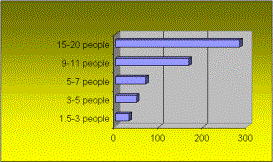
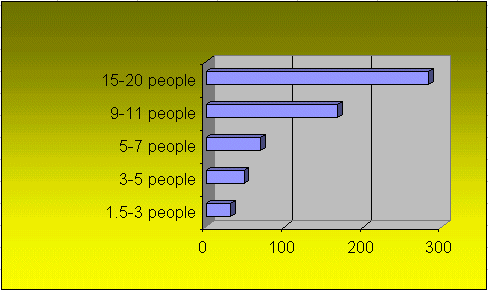
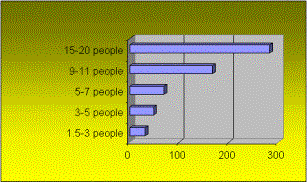
The smaller the better. |
|
491 medium sized projects with 35,000-95,000
SLOC (source lines of code) |
|
Putnam, Lawrence H. and Myers, Ware.
Familiar Metrics Management: Small is Beautiful--Once Again. IT Metrics
Strategis IV:8:12-16, Cutter Information Corp., August 1998. |
|
|
|
|
|
|
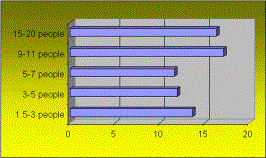
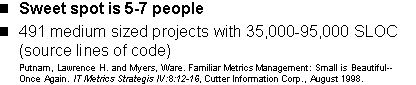
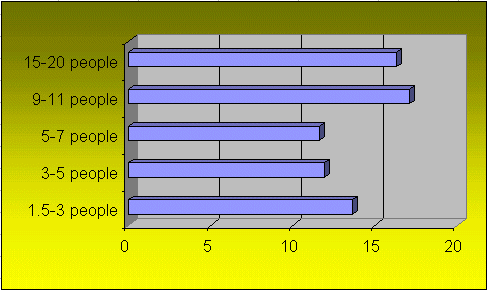
Sweet spot is 5-7 people |
|
491 medium sized projects with 35,000-95,000
SLOC (source lines of code) |
|
Putnam, Lawrence H. and Myers, Ware.
Familiar Metrics Management: Small is Beautiful--Once Again. IT Metrics
Strategis IV:8:12-16, Cutter Information Corp., August 1998. |
|
|
|
|
|
|
|
|
One of most remarkable organizations, processes,
and development cultures seen in AT&T Bell Laboratories Pasteur process
research project |
|
Project management, product management, QA
integral to team, all making technical contributions |
|
Higher communication saturation than 89% of
projects |
|
More even distribution of workload |
|
“Anti-schismogenetic” – no cliques |
|
Highly iterative development |
|
Strong architectural interaction with
implementation |
|
More time spent in project team meetings than
anything else – several hours a day |
|
Gerry Weinberg notes that CMM Level 1 and 2
teams need strong managerial direction. Level 3 paradigm shift is
self-directing team. Borland team was clearly in this category, although
not by commonly accepted criteria. |
|
|
|
|
|
|
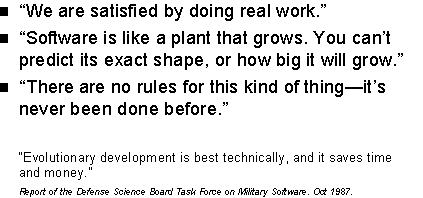
“We are satisfied by doing real work.” |
|
“Software is like a plant that grows. You can’t
predict its exact shape, or how big it will grow.” |
|
“There are no rules for this kind of thing—it’s
never been done before.” |
|
|
|
“Evolutionary development is best
technically, and it saves time and money.” |
|
Report of the Defense Science Board Task
Force on Military Software. Oct 1987. |
|
|
|
|
|
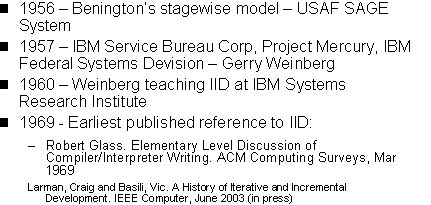
1956 – Benington’s stagewise model – USAF SAGE
System |
|
1957 – IBM Service Bureau Corp, Project Mercury,
IBM Federal Systems Devision – Gerry Weinberg |
|
1960 – Weinberg teaching IID at IBM Systems
Research Institute |
|
1969 - Earliest published reference to IID: |
|
Robert Glass. Elementary Level Discussion of
Compiler/Interpreter Writing. ACM Computing Surveys, Mar 1969 |
|
Larman, Craig and Basili, Vic. A History of
Iterative and Incremental Development. IEEE Computer, June 2003 (in press) |
|
|
|
|
|
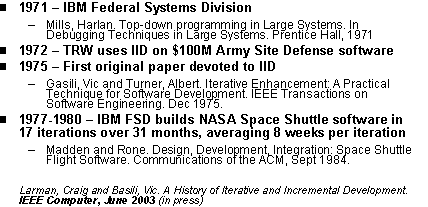
1971 – IBM Federal Systems Division |
|
Mills, Harlan. Top-down programming in Large
Systems. In Debugging Techniques in Large Systems. Prentice Hall, 1971 |
|
1972 – TRW uses IID on $100M Army Site Defense
software |
|
1975 – First original paper devoted to IID |
|
Gasili, Vic and Turner, Albert. Iterative
Enhancement: A Practical Technique for Software Development. IEEE
Transactions on Software Engineering. Dec 1975. |
|
1977-1980 – IBM FSD builds NASA Space Shuttle
software in 17 iterations over 31 months, averaging 8 weeks per iteration |
|
Madden and Rone. Design, Development,
Integration: Space Shuttle Flight Software. Communications of the ACM, Sept
1984. |
|
|
|
Larman, Craig and Basili, Vic. A History of
Iterative and Incremental Development. IEEE Computer, June 2003 (in press) |
|
|
|
|
|
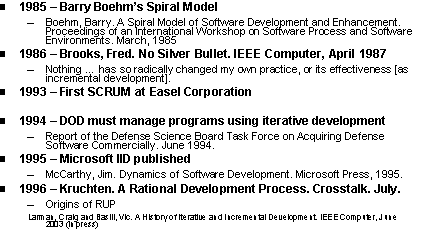
1985 – Barry Boehm’s Spiral Model |
|
Boehm, Barry. A Spiral Model of Software
Development and Enhancement. Proceedings of an International Workshop on
Software Process and Software Environments. March, 1985 |
|
1986 – Brooks, Fred. No Silver Bullet. IEEE
Computer, April 1987 |
|
Nothing … has so radically changed my own
practice, or its effectiveness [as incremental development]. |
|
1993 – First SCRUM at Easel Corporation |
|
|
|
1994 – DOD must manage programs using iterative
development |
|
Report of the Defense Science Board Task Force
on Acquiring Defense Software Commercially. June 1994. |
|
1995 – Microsoft IID published |
|
McCarthy, Jim. Dynamics of Software Development.
Microsoft Press, 1995. |
|
1996 – Kruchten. A Rational Development Process.
Crosstalk. July. |
|
Origins of RUP |
|
Larman, Craig and Basili, Vic. A History of
Iterative and Incremental Development. IEEE Computer, June 2003 (in press) |
|
|
|
|
|
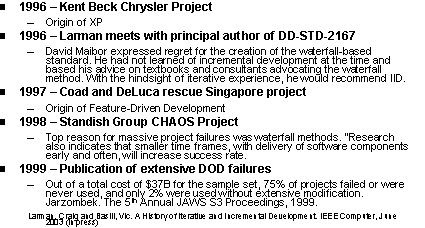
1996 – Kent Beck Chrysler Project |
|
Origin of XP |
|
1996 – Larman meets with principal author of
DD-STD-2167 |
|
David Maibor expressed regret for the creation
of the waterfall-based standard. He had not learned of incremental
development at the time and based his advice on textbooks and consultants
advocating the waterfall method. With the hindsight of iterative experience,
he would recommend IID. |
|
1997 – Coad and DeLuca rescue Singapore project |
|
Origin of Feature-Driven Development |
|
1998 – Standish Group CHAOS Project |
|
Top reason for massive project failures was
waterfall methods. “Research also indicates that smaller time frames, with
delivery of software components early and often, will increase success
rate. |
|
1999 – Publication of extensive DOD failures |
|
Out of a total cost of $37B for the sample set,
75% of projects failed or were never used, and only 2% were used without
extensive modification. Jarzombek. The 5th Annual JAWS S3
Proceedings, 1999. |
|
Larman, Craig and Basili, Vic. A History of
Iterative and Incremental Development. IEEE Computer, June 2003 (in press) |
|
|
|
|
|
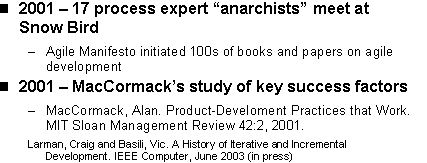
2001 – 17 process expert “anarchists” meet at
Snow Bird |
|
Agile Manifesto initiated 100s of books and
papers on agile development |
|
2001 – MacCormack’s study of key success factors |
|
MacCormack, Alan. Product-Develoment Practices
that Work. MIT Sloan Management Review 42:2, 2001. |
|
Larman, Craig and Basili, Vic. A History of
Iterative and Incremental Development. IEEE Computer, June 2003 (in press) |
|
|
|
|
|
|
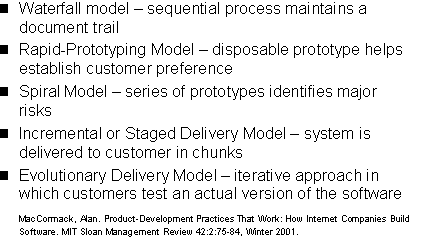
Waterfall model – sequential process maintains a
document trail |
|
Rapid-Prototyping Model – disposable prototype
helps establish customer preference |
|
Spiral Model – series of prototypes identifies
major risks |
|
Incremental or Staged Delivery Model – system is
delivered to customer in chunks |
|
Evolutionary Delivery Model – iterative approach
in which customers test an actual version of the software |
|
MacCormack, Alan. Product-Development
Practices That Work: How Internet Companies Build Software. MIT Sloan
Management Review 42:2:75-84, Winter 2001. |
|
|
|
|
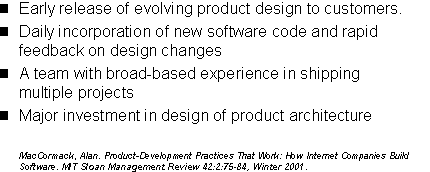
Early release of evolving product design to
customers. |
|
Daily incorporation of new software code and
rapid feedback on design changes |
|
A team with broad-based experience in shipping
multiple projects |
|
Major investment in design of product
architecture |
|
|
|
MacCormack, Alan. Product-Development
Practices That Work: How Internet Companies Build Software. MIT Sloan
Management Review 42:2:75-84, Winter 2001. |
|
|
|
|
|
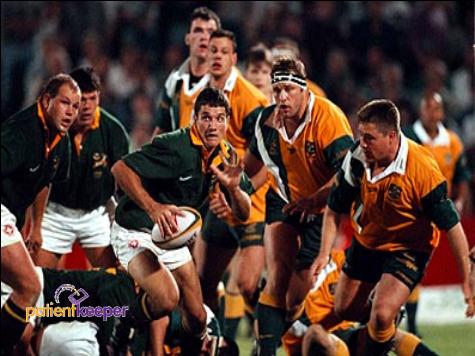
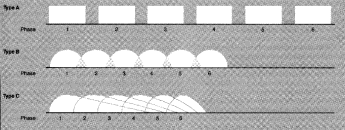
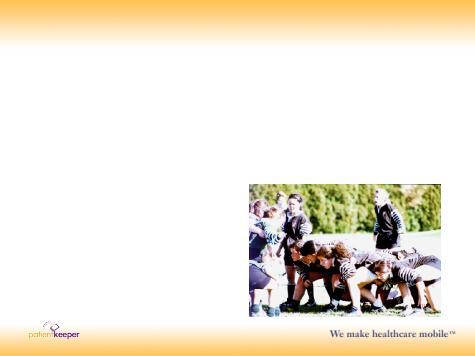
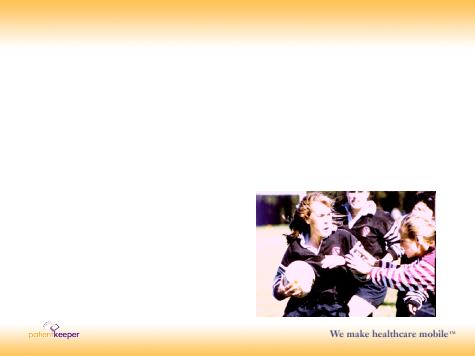
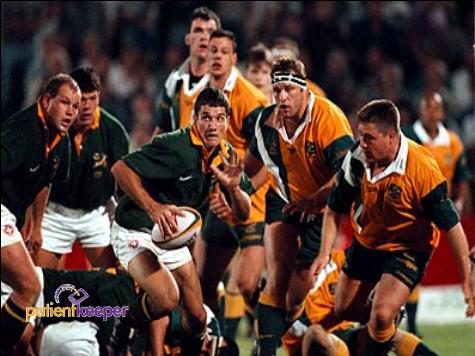
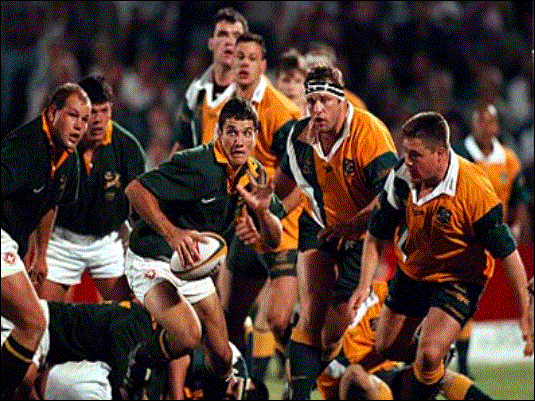
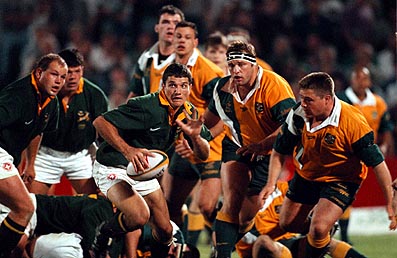
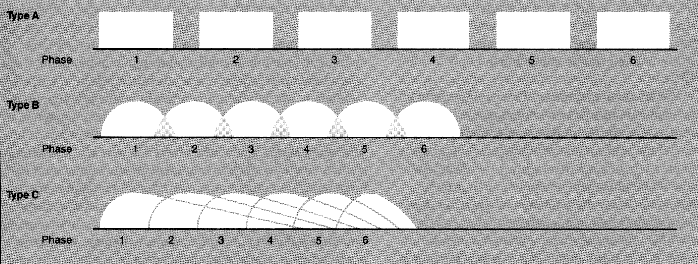
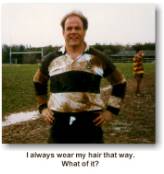
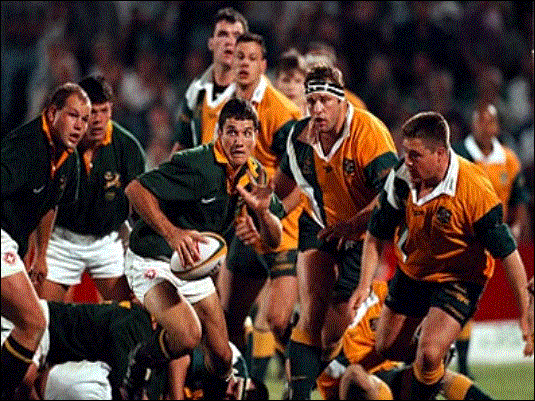
Old model – Relay Race |
|
Speed and flexibility not adequate in today’s
market |
|
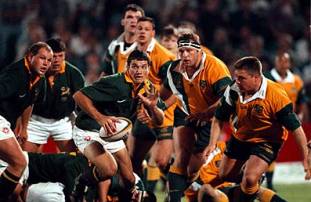
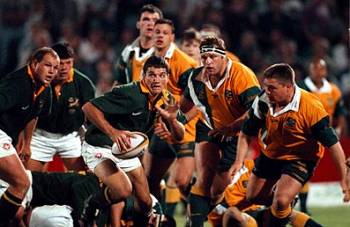
New model - Rugby |
|
|
|
|
|
|
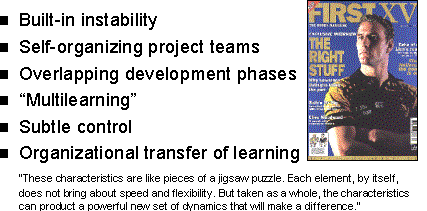
Built-in instability |
|
Self-organizing project teams |
|
Overlapping development phases |
|
“Multilearning” |
|
Subtle control |
|
Organizational transfer of learning |
|
“These characteristics are like pieces of a
jigsaw puzzle. Each element, by itself, does not bring about speed and
flexibility. But taken as a whole, the characteristics can product a
powerful new set of dynamics that will make a difference.” |
|
|
|
|
|
Top management kicks off development process by
signaling broad goal. |
|
Project team is offered extremely challenging
goals with wide measure of freedom. |
|
Example: Fuji-Xerox gave FX-3500 project team
two years to come up with a copier that cut costs in half |
|
Top management creates an element of tension in
the project team through challenging requirements with wide freedom to
achieve strategic objective. |
|
Honda Executive: “It’s like putting the team
members on the second floor, removing the ladder, and telling them to jump
or else. I believe creativity is born by pushing people against the wall
and pressuring them almost to the extreme.” |
|
|
|
|
|
A project team takes on a self-organizing
character as it is driven to a state of “zero information” – where prior
knowledge does not apply. |
|
Left to stew, the process begins to create its
own dynamic order. |
|
The project team begins to operate like a
start-up company. |
|
A group possesses a self-organizing capability
when it exhibits three conditions. |
|
Autonomy |
|
Self-transcendence |
|
Cross-fertilization |
|
At some point, the team begins |
|
to create its own concept. |
|
|
|
|
|
Headquarters involvement is limited to providing
guidance, money, and moral support at the outset. |
|
On a day to day basis, management seldom
intervenes and the team is free to set its own direction. |
|
In a way, top management acts as a venture
capitalist |
|
“We open our purse and keep our mouth closed.” |
|
Example: IBM development of personal computer |
|
Example: Honda City project team, average age
27, “Develop the kind of car that the youth segment would like to drive.” |
|
|
|
|
The project teams appear to be absorbed in the
never-ending quest for “the limit.” |
|
They elevate their goals through the development
process. |
|
By pursuing what appear to be contradictory
goals, they devise ways to |
|
override the status quo and |
|
make the big discovery. |
|
Example: Canon AE-1 team |
|
|
|
|
Team with wide variety of specializations,
thought processes, and behavior patterns carries out new product
development. |
|
Working in one large room is best (Fuji-Xerox). |
|
“When all team members |
|
are in one room, others |
|
information becomes yours |
|
without even trying.” |
|
|
|
|
|
Self-organizing character of the team produces
unique dynamic or rhythm |
|
Sashimi system – Fuji Xerox Rugby system – Honda |
|
Hard merits (demerits) |
|
Speed and flexibility (watch out for muck and
mall) |
|
Soft merits |
|
Share responsibility and cooperation |
|
Stimulates involvement and commitment |
|
Sharpens a problem-solving focus |
|
Develops initiative and diversified skills |
|
Heightens sensitivity to market conditions |
|
|
|
|
|
|
|
Learning by doing in two dimensions |
|
Across organization |
|
Across specialty |
|
Enhanced learning opportunities |
|
15% of time devoted to “dreams” – 3M |
|
Peer pressure to study |
|
Send team to Europe to look around – Honda |
|
Bring in top academics and consultants – HP |
|
Everyone learns multiple skills |
|
|
|
|
|
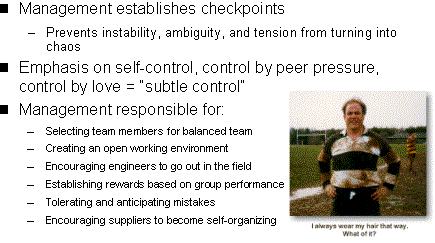
Management establishes checkpoints |
|
Prevents instability, ambiguity, and tension
from turning into chaos |
|
Emphasis on self-control, control by peer
pressure, control by love = “subtle control” |
|
Management responsible for: |
|
Selecting team members for balanced team |
|
Creating an open working environment |
|
Encouraging engineers to go out in the field |
|
Establishing rewards based on group performance |
|
Tolerating and anticipating mistakes |
|
Encouraging suppliers to become self-organizing |
|
|
|
|
|
Transfer knowledge outside group |
|
Scatter successful team to new projects |
|
Institutionalize practice (monthly demos at IDX) |
|
Consciously pursue unlearning |
|
Next generation must be 40% better |
|
Cut product cycle by 80% |
|
Scrap old parts, processes, tools |
|
|
|
|
|
Winding the Rubber Band Principle: Broad mandate
and demanding goals create tension. |
|
Anti-Waterfall Principle: Operational decisions
are made incrementally. Strategic decisions delayed to last moment. |
|
Push/Pull Principle: Differentiation in concept
phase, integration dominates in implementation phase |
|
Spread the Wealth Principle: Non-experts take on
new tasks. |
|
Cuckoo Principle: Successful SCRUMs become
company models (or they can get crushed because they are different). |
|
Control Anti-Pattern: Seniority based companies
have difficult time. |
|
But in times of desperation, SCRUMs are easily
created. |
|
|
|
|
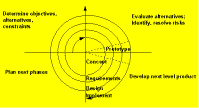
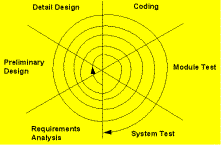
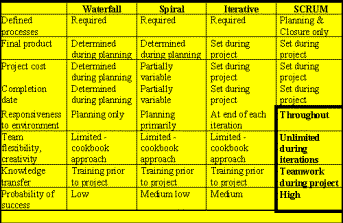
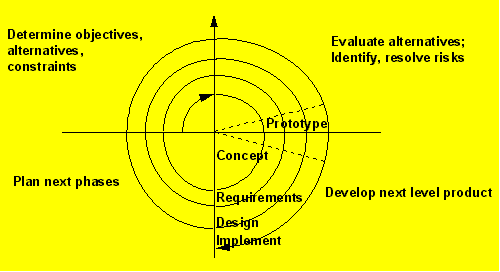
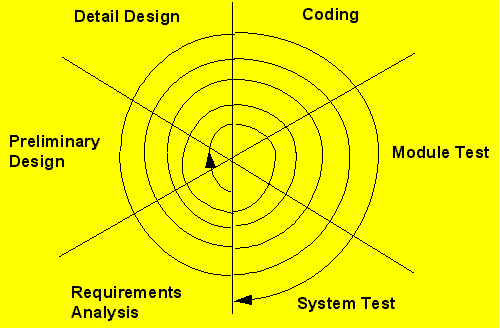
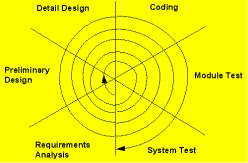
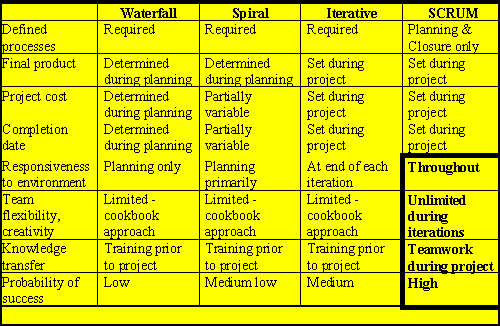
Barry Boehm introduced the Spiral Methodology to
"fix" problems with the Waterfall Methodology. This is the most
commonly used variant of the Waterfall today. |
|
The Spiral methodology "peels the
onion", progressing through "layers" of the development
process. A prototype lets users determine if the project is on track,
should be sent back to prior phases, or should be ended. However, the phases
and phase processes are still linear. |
|
|
|
Boehm, B.W. A Spiral Model of Software
Development and Enhancement. Proceedings of an International Workshop on
Software Process and Software Environments, Coto de Caza, Trabuco Canyon,
California, March 27-29, 1985. |
|
Boehm, Barry. A Spiral Model of Software
Development and Enhancement. ACM SIGSOFT Software Engineering Notes,
August 1986.
Boehm, Barry. A Spiral Model of Software Development and
Enhancement. IEEE Computer, vol.21, #5, May 1988, pp 61-72. |
|
|
|
|
|
|
|
|
The Iterative methodology improves on the Spiral
methodology. |
|
Each iteration consists of all of the standard
Waterfall phases, but each iteration only addresses one subsystem. Further
iterations can add resources to the project while ramping up the speed of
delivery. |
|
Improves cost control, reduces risk, ensures
delivery of (sub)systems, and improves overall flexibility. |
|
Still assumes that the underlying development
processes are defined and linear. |
|
|
|
|
|
|
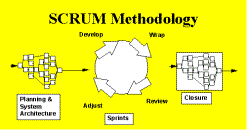
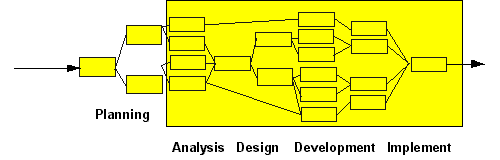
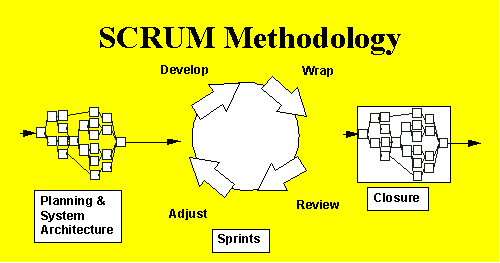
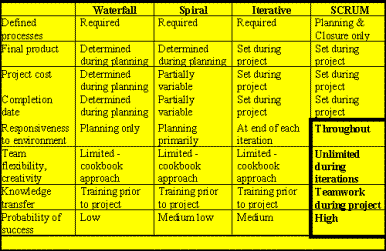
The first and last phases (Planning and Closure)
consist of defined processes. |
|
The Sprint phase is an empirical process. It is
treated as a black box that requires external controls. |
|
Sprints are nonlinear and flexible. Sprints are
used to evolve the final product. |
|
The project is open to the environment until the
Closure phase. The deliverable can be changed at any time. |
|
The deliverable is determined during the project
based on the environment. |
|
|
|
|
|
|
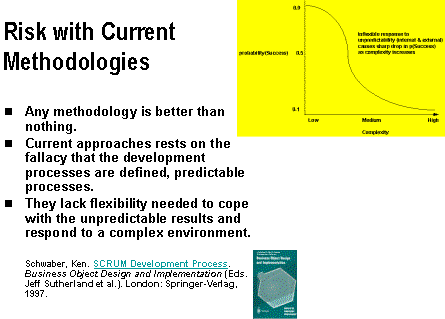
Any methodology is better than nothing. |
|
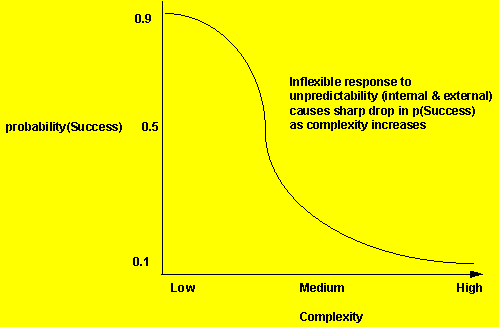
Current approaches rests on the fallacy that the
development processes are defined, predictable processes. |
|
They lack flexibility needed to cope with the
unpredictable results and respond to a complex environment. |
|
|
|
Schwaber, Ken. SCRUM Development Process. Business
Object Design and Implementation (Eds. Jeff Sutherland et al.). London:
Springer-Verlag, 1997. |
|
|
|
|
|
|
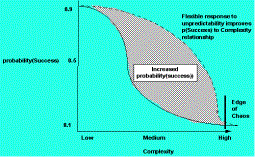
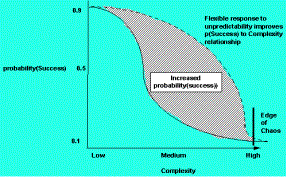
Development teams need to operate adaptively
within a complex environment using imprecise processes. |
|
SCRUM can accelerate closure by inducing the
phenomenon known as "punctuated equilibrium" seen in the
evolution of biological species. |
|
Levy, Steven. Artificial Life: A Report from
the Frontier Where Computers Meet Biology. Vintage Books, 1993. |
|
Lewin, Roger. Complexity: Life at the Edge
of Chaos. Collier Books, 1994. |
|
|
|

 Notes
Notes